Mass Production Tool SSD
For Business Only
an increase in layers and the density of NAND memory packaging.
All these factors affect the reliability of NAND chips and, most importantly, the increasing number of defects in their production
(which are defective NAND chips, is also used in the production of SSD drives).
leads to increasingly lower reliability of NAND chips and increasingly higher requirements for the quality of their
production.
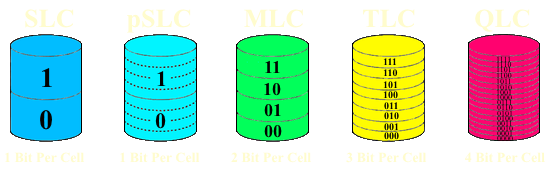
which increases reliability by 10-20 times and reduces volume by 3 times in (TLC(3bit)) NAND and 4 times in (QLC(4bit))
NAND.
Gabriel Ferraz.
with prices ranging from 2 to 4 times higher than those of ordinary TLC SSDs.
Some examples of prices for SSD p(SLC) mode - link1, link2, link3, link4, link5, link6, link7.
The market niche is empty, with no competition and very low supply.
To change the firmware operating mode in SSD drives,
you need the Mass Production Tool SSD (MPTool) program,
which is used in the production of SSDs at the factory.
IG5236+Micron(176L)B47R+4TB+DW
IG5236+YMTC(X2-9060)(128L)TAS+K3
IG5236+YMTC(X2-9060)(128L)TAS+2LUN+K3
IG5236+SKHynix(176L)V7+K3
Supports SSD drives of your choice.
MAP1602+YMTC(X2-9060)(128L)TAS
MAP1602+YMTC(X3-9070)(232L)WDS
Supports SSD drives of your choice.


U.S.A.